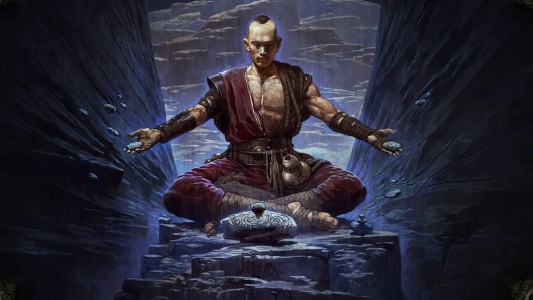
Spin Monk in Path of Exile 2 looks chaotic in the exact way good action RPG builds often do. You’re spinning through packs, stacking shocks, freezing enemies mid-animation, dropping Tempest Bell, then dashing away before the arena turns into a death zone. On the surface it feels like a simple “hold and spin” setup, but the build becomes far more demanding once you enter harder maps and endgame bosses. At that stage, weak charge uptime, poor staff scaling, or sloppy positioning immediately start showing up in your clear speed and survivability. That is why many players spend so much time comparing upgrades, crafting weapons, and checking PoE2 Items before pushing high-tier content.
The Build Looks Simple, But The Rotation Matters
The core gameplay loop is straightforward at first. You build momentum with Whirling Assault or Tempest Flurry, maintain Charged Staff uptime, then use Tempest Bell to burst rares, bosses, or dangerous elite packs. The problem is that the build punishes lazy timing harder than many players expect.
If Power Charges fall off, damage drops sharply. If Mantra of Destruction is used carelessly, your burst windows feel inconsistent. If you spin too long inside overlapping ground effects, the build suddenly feels fragile despite strong damage output. The smoother endgame versions solve this by building reliable charge generation into the setup instead of constantly stopping to rebuild momentum.
| Build Focus | What It Improves | Why Players Prioritize It |
| Power Charge uptime | Consistent crit scaling | Prevents damage collapse during maps |
| Critical strike staff setup | Burst and Bell damage | Scales better into endgame bosses |
| EV/ES hybrid defence | Survivability | Helps avoid random deaths |
| Cold-Lightning layering | Freeze plus Shock utility | Safer mapping with strong clear |
The Staff Is Carrying More Damage Than You Think
One of the biggest mistakes newer Spin Monk players make is underestimating how important the Quarterstaff really is. The flashy lightning visuals can make the build feel elemental-heavy, but most strong setups still rely heavily on physical weapon scaling underneath all the conversion.
A powerful physical base with attack speed, critical strike chance, and strong flat physical rolls often outperforms mediocre elemental weapons once all the Monk conversion mechanics start scaling together. The weapon does not need perfect crafting immediately, but it absolutely needs enough raw damage to support the rest of the setup.
Pure elemental staves can work, especially with high investment, but weaker versions often feel inconsistent during tougher boss encounters or higher-tier maps. In practice, most players notice a massive difference the moment they upgrade into a properly scaled physical crit staff.
Endgame Spin Monk Is Really About Momentum
The strongest Spin Monk gameplay usually feels smooth because the build is constantly maintaining momentum. Once the rotation breaks, the build feels noticeably worse. That is why experienced players care so much about charge sustain tools like Profane Ritual or other reliable Power Charge generation methods.
The goal is not simply generating damage. The goal is avoiding downtime.
1.Enter the map and immediately build early charges with fast pack clears.
2.Keep Charged Staff active before engaging tankier enemies.
3.Use movement aggressively instead of face-tanking mechanics.
4.Drop Tempest Bell only during meaningful burst windows.
5.Refresh buffs before they fully expire rather than rebuilding from zero.
6.Keep spinning through safe lanes instead of overcommitting into dangerous ground effects.
Players who treat Spin Monk like a stationary melee build usually hit a wall quickly. The build performs best when movement, repositioning, and burst timing all stay fluid together.
Damage Feels Amazing, Defence Needs Planning
This is the point where many Spin Monk builds either stabilize or completely fall apart. Early mapping can make the build feel invincible because enemies die before threatening you. Once Tier 15 and higher content appears, pure damage stacking starts getting punished.
Most successful endgame setups avoid heavy armour stacking entirely. Instead, they lean into Evasion, Energy Shield, fast recovery, and layered avoidance mechanics. Hybrid EV/ES gear fits naturally into the Monk passive tree and synergizes well with fast repositioning playstyles.
| Defensive Layer | Why It Works | Common Result |
| Evasion | Avoids repeated hits | Strong against map clutter |
| Energy Shield | Adds recovery buffer | Helps survive burst damage |
| Wind Dancer | Reduces incoming spikes | Safer while repositioning |
| Freeze utility | Slows enemy pressure | Creates breathing room |
| Deflect and avoidance tools | Smooth incoming damage | Less random one-shots |
Cold-Lightning hybrid versions are especially popular because freeze provides crowd control while shock continues scaling damage aggressively. It is not complicated theorycrafting. It simply makes difficult maps feel more manageable.
Tempest Bell Is What Pushes Boss Damage Over The Top
Mapping is where Spin Monk feels flashy, but Tempest Bell is usually what makes the build truly dangerous during bosses. Rapid multi-hit attacks feed Bell extremely well, allowing huge bursts once everything lines up correctly.
Invoker setups often feel smoother during progression because Herald scaling and elemental support naturally help with consistency while gearing. Martial Artist variants can eventually hit much harder, especially once gear investment becomes serious, but they tend to require stronger staffs and better defensive management before reaching that point comfortably.
The difference between an average Spin Monk and a strong one often comes down to whether Tempest Bell windows are properly optimized instead of randomly dropped during movement chaos.
Gear Upgrades Matter More Than Small Passive Tweaks
Many players spend too much time endlessly adjusting passive trees while ignoring weak equipment. In reality, Spin Monk scales heavily from efficient gear upgrades, especially the weapon, rings, and defensive EV/ES slots.
A single weak Quarterstaff can flatten the entire build regardless of how optimized the passive tree looks. That is why experienced players constantly compare Path of Exile2 Items before committing expensive crafting currency. Efficient upgrades usually come from identifying the biggest bottleneck first instead of randomly improving minor stats across multiple slots.
Once the build reaches that balance between movement, crit scaling, defence, and Bell burst timing, Spin Monk becomes one of the fastest and most satisfying endgame melee playstyles currently available in PoE 2.